Selling a Six-Figure Build to a Buyer Who Cannot Evaluate It
Technical buyers judge your approach. Non-technical buyers judge your ability to reduce their risk. Here is how to sell complex builds without discounting.

In short
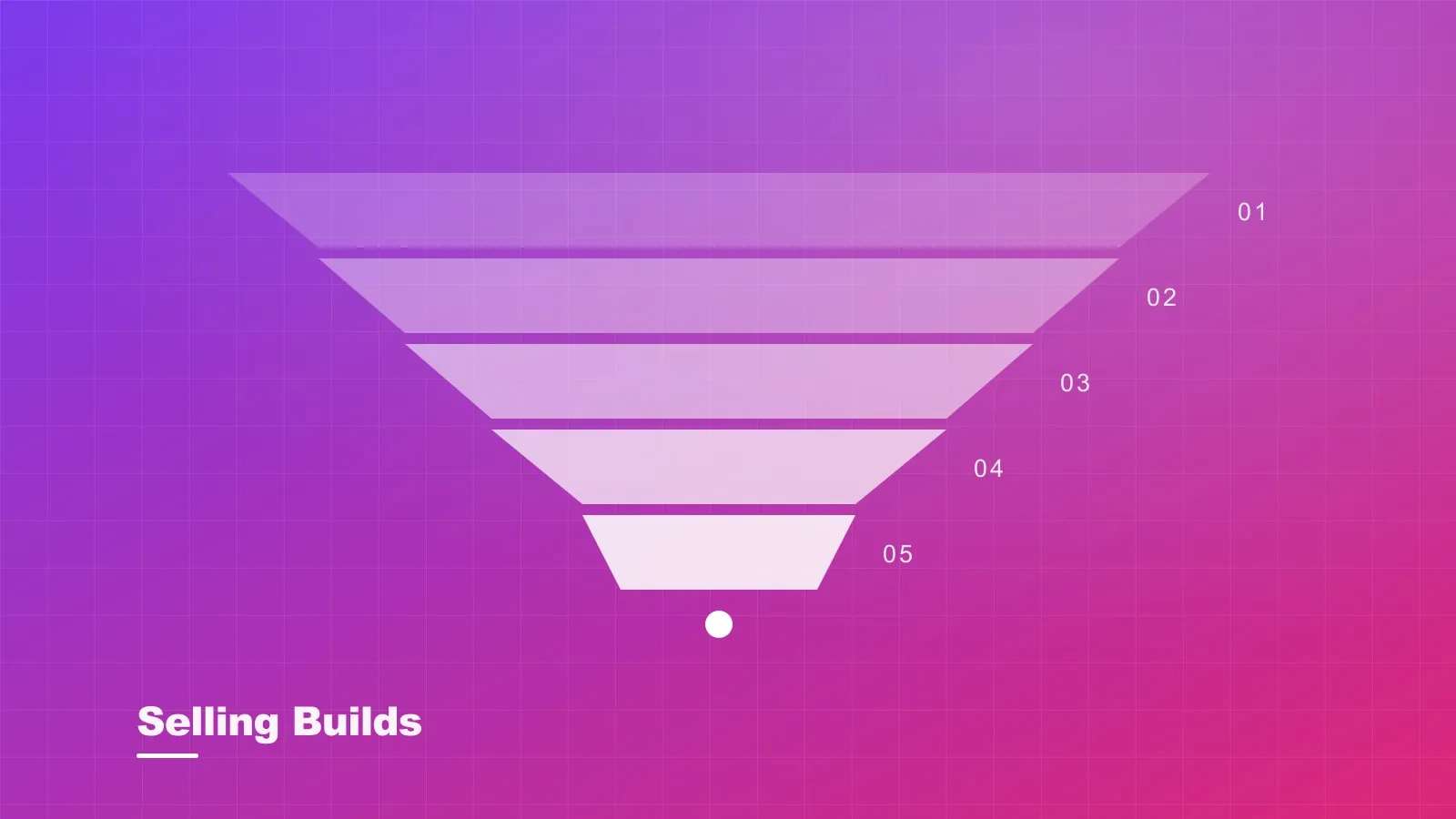
Non-technical buyers cannot assess your technical approach, so they evaluate the thing they can assess: how likely you are to fail them. Selling complex builds is mostly about making risk visible and small - paid discovery, staged commitments, and specificity about what could go wrong.
Key takeaways
- A buyer who cannot judge the work will judge your risk profile instead, then default to price.
- Paid discovery reframes the first commitment from a six-figure decision to a small one.
- Naming the risks yourself builds more credibility than claiming there are none.
- Losing to a cheaper vendor is usually a scoping failure, not a pricing one.
A buyer who understands software judges your technical approach. A buyer who does not - which is most of the people signing six-figure development contracts - judges something else entirely.
They judge how likely you are to fail them. And in the absence of any way to assess that, they default to the one variable they can compare: price.
Most lost deals in technical services are lost here, not on capability.
What the buyer is actually worried about
Sit with the buyer’s position for a moment. They are about to spend a meaningful portion of a budget on something they cannot inspect, will not be able to evaluate when delivered, and which they have probably watched go wrong before - either here or at a previous job.
Their real questions are not about your stack.
- Will this cost what you said?
- Will it arrive roughly when you said?
- Will it do the thing we actually need, or the thing I badly described?
- If it goes wrong, how exposed am I personally?
That last one drives more decisions than anything else and is almost never said aloud. The person signing is making a career-visible bet. A proposal that reduces their personal exposure is worth more to them than one that is technically superior.
Make the first commitment small
The single most effective change to a technical sales process is refusing to quote a large build from a vague brief - and offering paid discovery instead.
Paid discovery is a short, separately-priced engagement producing a specification, an architecture outline, a phased plan and a firm estimate. Priced at a small fraction of the build.
This works on three levels simultaneously.
It reduces the buyer’s decision size. They are no longer approving a six-figure build on faith. They are approving a small, bounded piece of work with a concrete deliverable. That is a decision a manager can make without a committee.
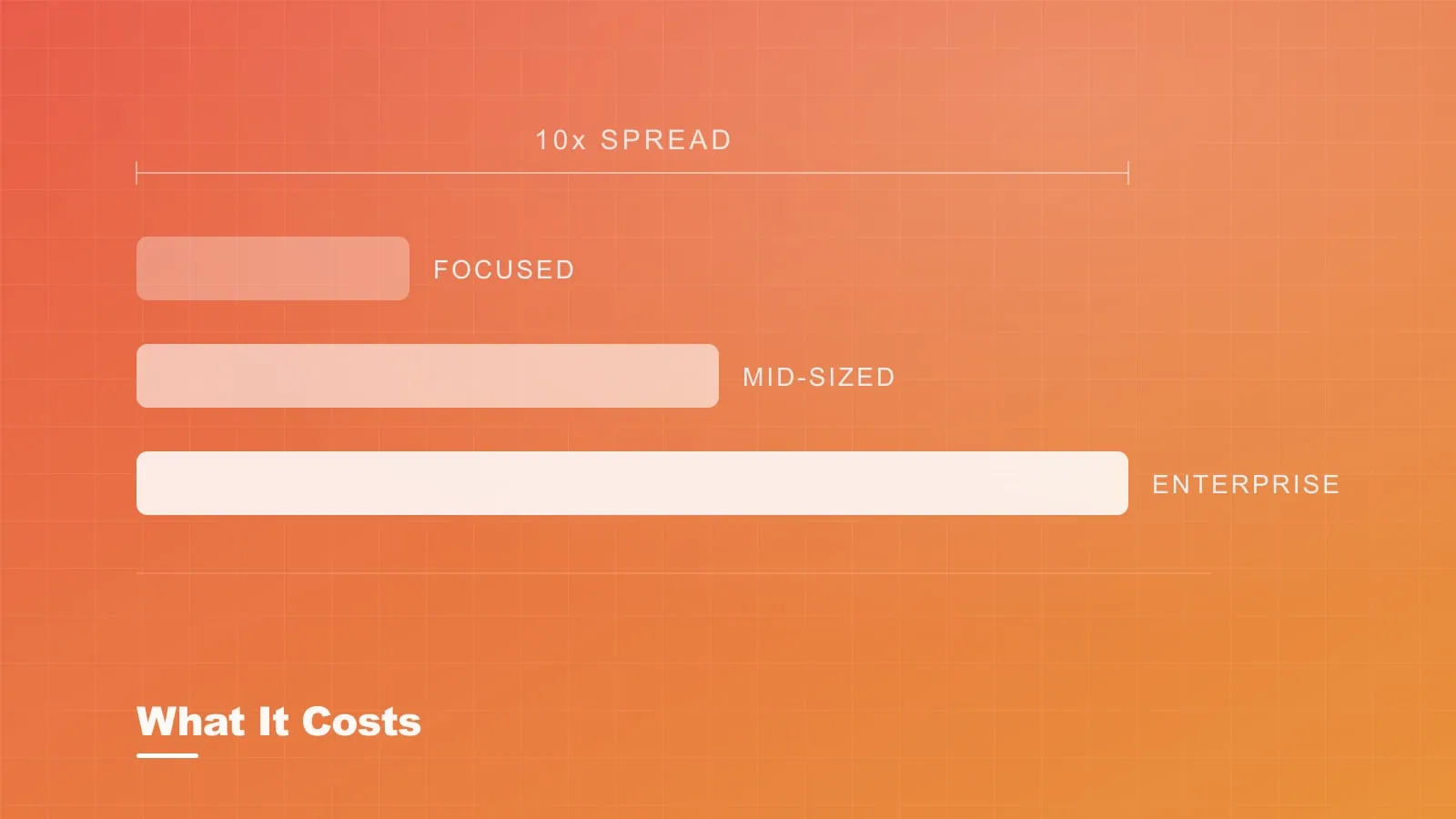
It makes your eventual quote credible. You are quoting against real understanding rather than assumption, which means the number holds. As covered in why development quotes vary 10x, the cheapest quote is usually the one that understood the least - discovery is how you demonstrate that you are not that quote.
It qualifies hard. A prospect unwilling to pay a small amount for discovery was rarely going to sign the large contract. Finding that out in week one instead of week eight is worth the deals it costs you.
Name the risks before they do
Counterintuitively, the fastest way to build confidence with a nervous buyer is to tell them what could go wrong.
Every vendor claims their process is solid and their team is experienced. It is noise; the buyer has heard it from everyone. What almost nobody does is say:
“The two things most likely to go wrong here are the data migration from your existing system - we have not seen inside it yet, and if the data is inconsistent that could add three to four weeks - and getting sign-off from your compliance team, which we would want to start in week one rather than week ten.”
This does several things at once. It demonstrates you have actually thought about their project rather than pattern-matched it. It sets expectations before there is a problem, which is the only time expectation-setting works. And it makes every competitor who claimed everything would be smooth look like they had not looked closely.
Buyers do not expect zero risk. They expect you to know where it is.
Sell in stages
Large projects sold as single commitments are hard to approve and brutal when they go wrong. The same project sold as phases - each with its own deliverable, price and decision point - is much easier to say yes to.
A workable structure:
| Phase | Deliverable | Buyer’s decision |
|---|---|---|
| Discovery | Spec, architecture, firm estimate | Small, low-risk |
| Phase 1 | Working core, one complete workflow | Continue or stop with something usable |
| Phase 2 | Remaining scope | Continue, having seen you deliver |
| Support | Ongoing maintenance | Renewal, not a leap |
The point of the “stop with something usable” property is that it genuinely de-risks the buyer, which is why it closes deals. It also imposes useful discipline on you - a Phase 1 that must stand alone forces exactly the scoping rigour described in MVP scoping.
When you lose on price
Losing to a cheaper vendor is almost always a scoping failure rather than a pricing one.
If two proposals describe similar deliverables and one costs half as much, the buyer is being rational. They cannot see what the extra money buys, and “higher quality” is not visible in a document.
The response is not to discount. It is to make the difference legible - usually by being concrete about what the cheaper proposal has not accounted for. Not as a criticism of the competitor, but as a set of questions the buyer can go and ask:
“It is worth asking any vendor at that price point what happens when the legacy data does not match the schema, whether the estimate includes the compliance review, and who owns the system after handover. Those three things account for most of the difference between quotes on projects like this.”
You have now armed the buyer to evaluate properly rather than asking them to trust you. If the cheaper vendor genuinely covered all three, they deserved to win.
The uncomfortable part
Some deals are lost because the buyer wanted the cheapest option and always would have. Chasing those with discounts trains your pipeline toward exactly the clients who will be hardest to serve profitably.
The buyers worth winning are the ones who have been burned before - they understand why the cheap option was expensive, and they are looking for evidence that you are different. Everything above is that evidence.
For those buyers, the strongest asset is not a portfolio. It is being visibly specific in public about how this work actually goes - which is the entire argument for publishing honest content about costs and trade-offs rather than case studies claiming everything went perfectly.
FAQ
Frequently asked questions
How do you sell a technical project to a non-technical buyer?
Sell risk reduction rather than technical approach. A buyer who cannot evaluate your architecture will evaluate whether you seem likely to deliver, so focus on making the first commitment small, being specific about what could go wrong, and demonstrating that you have handled similar situations. Technical depth still matters, but as evidence of competence rather than as the argument itself.
What is paid discovery and why use it?
Paid discovery is a short, separately-priced engagement that produces a specification, architecture outline and firm estimate before the main build is committed. It reduces the buyer risk from a six-figure decision to a small one, and it means the eventual quote is based on real understanding rather than assumption. It also filters out prospects who were never going to proceed.
Why do we keep losing to cheaper competitors?
Usually because the buyer could not see any difference other than price. If two proposals describe similar deliverables and one is half the cost, the cheaper one is the rational choice. The fix is rarely to discount - it is to make the difference legible by being specific about the risks the cheaper quote has not accounted for.
Should you give a fixed price for custom software?
Fixed price works when scope is genuinely well understood, typically after paid discovery. Offering it before that either transfers unpriced risk to you or forces you to pad heavily, which loses the deal. A common approach is fixed price for discovery, then fixed price per clearly defined phase.

Written by
Jeevan Kumar
Founder, FlowLaunch
Jeevan has spent nine years building and scaling digital businesses, most recently taking a services company from zero to seven figures without outside funding. He writes about the systems underneath growth, not the tactics on top of it.
- 9 years operating
- Bootstrapped to 7 figures
- 40+ growth engagements